
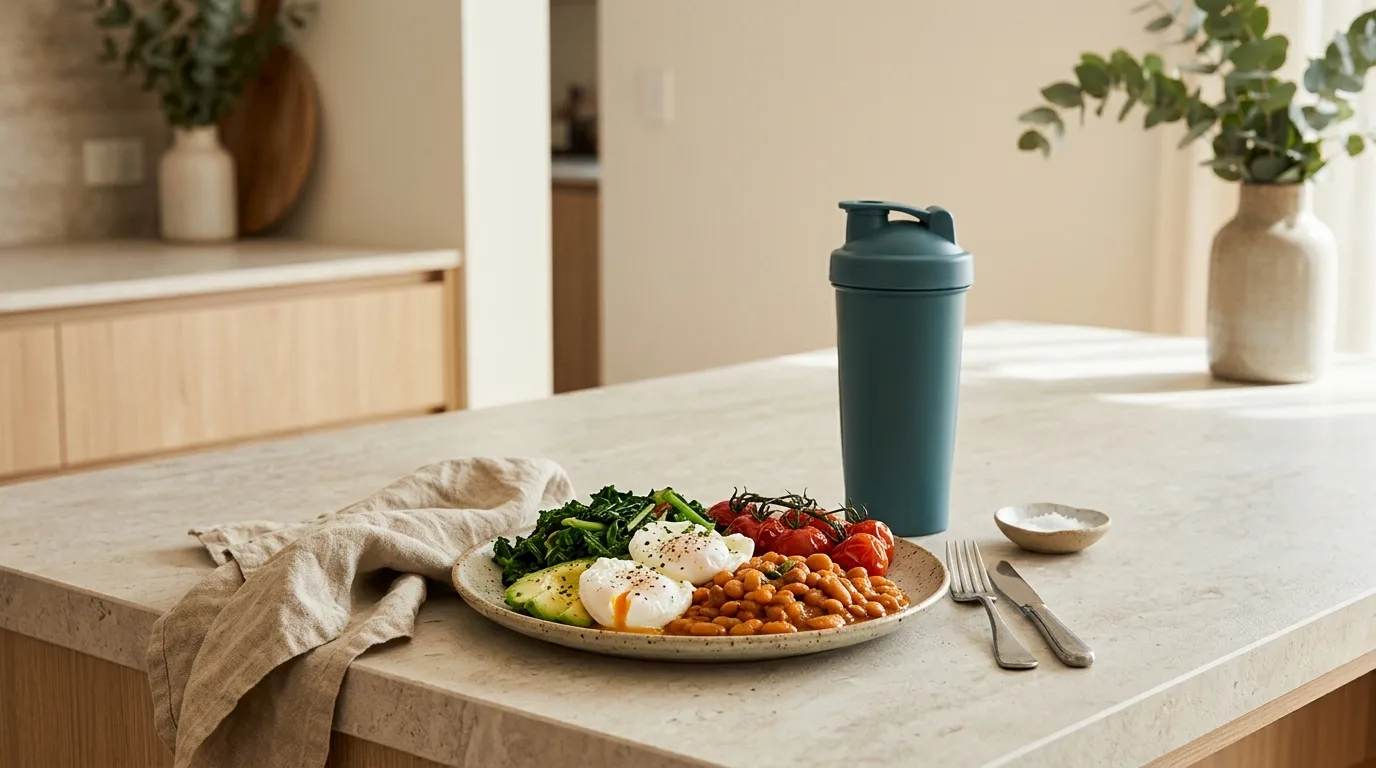
Protein shakes and proteinmaxxing: do you actually need them?
If your feed is full of people tracking every gram, you've met proteinmaxxing: the idea of hitting a protein target at every meal, often with a shake in the gym bag. Getting enough protein still comes down to what you eat.
So do you need a shake? Here is what Australian health sources say about how much protein you need, when a shake is genuinely handy, and how the Thrive Health Band and app help you see your meals, muscle and training right across your health, so you can decide with your own numbers.
How much protein do you need?
The Better Health Channel says your needs depend on your weight, sex, age and health, and that you can meet them by following the Australian dietary guidelines. Protein foods include lean meat, poultry, fish, eggs, tofu, nuts, seeds and legumes. Milk, yoghurt, cheese and suitable alternatives can contribute too.
Better Health adds that most Australians get more than enough protein from food, and that in the most recent national nutrition survey 99% of Australians got enough from what they ate.
Needs do rise a little for people who train hard. The Australian Institute of Sport says athletes in heavy training need more protein than less active people, and suggests spreading it across the day. A sports dietitian can set a target for you.
So are shakes necessary?
Better Health says protein shakes, powders and supplements are unnecessary for most Australians' health needs, and that any protein beyond what your body uses is passed out or stored as weight gain. It suggests talking to your doctor if you're still interested. It also says very high protein diets promoted by some fad plans are not recommended.
The Australian Institute of Sport, which works with athletes, takes a "food first" approach too, because protein-rich foods bring calcium, iron, zinc and other nutrients that a powder does not. It says a supplement can make sense in some situations:
- Straight after a key workout, when you want protein quickly.
- To lift a meal or snack that is usually low in protein, such as breakfast.
- When your appetite is poor.
- When you can't store or prepare food, for example when travelling.
It also points out that shakes can be an expensive way to buy protein, that products differ in quality, and that some powders contain ingredients with little evidence behind them. If you do use one, the AIS suggests choosing a product that has been batch tested by a third party. If you have an allergy, check the label, since powders can contain milk, soy or nuts.
Everyday food-first ideas
A few simple swaps often do the job without a shake:
- Breakfast: eggs on toast, Greek yoghurt with fruit and nuts, or porridge made with milk.
- Lunch: tinned tuna or salmon, a bean salad, or leftover chicken in a wrap.
- Snacks: yoghurt, nuts or cottage cheese on crackers.
- Dinner: fish, lean meat or tofu with plenty of vegetables.
Our guides to how much protein you need as you get older and whether eggs are good for you go deeper on the food side.
How Thrive helps you keep track
The Thrive Health Band is screen-free, so you wear it through training and rest while the Thrive by Optihealth app does the joining up. For this topic:
- Food logging. Add a meal with a photo, a barcode scan or a search of Australian foods, and see your protein, calories, carbohydrates and fat for the day against your goals.
- Your own targets. Set a calorie target and adjust the protein, carbohydrate and fat split to suit you.
- Muscle trends. Take a reading using the electrode on the Band to see estimated muscle and body fat trends over weeks, with no scale to step on. Our guide to losing fat and keeping muscle explains why that matters.
- Training and recovery. Log strength sessions and see your Recovery Estimate, sleep and resting heart rate beside them.
- Ask Thrive. Try "How has my protein looked this week?" or "What changed in my muscle and sleep trends since I started lifting?"
Over time your Thrive app builds a picture of what's usual for you, and your Health Fingerprint is ready after about 30 days of wear. Thrive isn't a diagnosis, and it doesn't set a medical protein target. But you can show your Thrive trends to your GP or an Accredited Practising Dietitian, and a month of food and body composition estimates is a better starting point than a guess.
When to talk to your GP
If you're thinking about a high protein plan, you have kidney or liver concerns, you take regular medicines, or you're not sure whether you're eating enough, a chat with your GP or an Accredited Practising Dietitian is worthwhile. Better Health also lists Dietitians Australia as a good place to start.
Before you buy
- Thrive Health Band: A\$589 for the band including 12 months of the Thrive plan, paid upfront. Prices are in AUD and include GST.
- Free shipping. Your 12 months start when you activate your Band.
- One size, IP68, up to 14 days battery, 12-month warranty, no Apple Health sync. The app is Thrive by Optihealth on iPhone and Android.
- See today's price on the Thrive store
At renewal: a new band plus 12 more months for A\$589.
Or keep your band and renew the plan for A\$240 a year.
Or A\$29 a month with no lock-in.
Consumer guarantees under Australian Consumer Law always apply. See Returns if something is wrong with your purchase.
Common questions
Do I need a protein shake to build muscle?
Not necessarily. Better Health says shakes are unnecessary for most Australians, and the AIS says food comes first. Regular training matters most.
How much protein should I eat a day?
It depends on your weight, sex and health. Athletes in heavy training may have different needs. A sports dietitian can help set a personal target. If you have health concerns, talk to your GP or an Accredited Practising Dietitian.
Can Thrive track my protein?
Yes. You can log meals in the app and see your protein, calories, carbohydrates and fat against goals, and take a reading using the electrode on the Band to follow estimated muscle and body fat trends over time.
For more answers, see Questions.
Your next step
Log three days of meals in the Thrive app, look at your protein total, and see whether food alone already covers it.
Sources
- Better Health Channel, Protein: https\://www.betterhealth.vic.gov.au/health/healthyliving/protein
- Australian Institute of Sport, Isolated protein supplement: https\://www.ausport.gov.au/ais/nutrition/supplements/group_a/sports-foods2/isolated-protein-supplement2
- LADbible, proteinmaxxing and the protein frequency pop-up (2 Nov 2026): https\://www.ladbible.com/lifestyle/playlists-that-help-absorb-protein-373649-20261102
- Hawkins Watts, WattsUp Trend Watch, Sports Nutrition (22 Oct 2026): https\://www.hawkinswatts.com/au/insights/wattsup-trend-watch-sports-nutrition
- Google Play, Thrive by Optihealth (read 9 Nov 2026, Brisbane; listing updated 30 Oct 2026): https\://play.google.com/store/apps/details?id=com.sensacare.app
- Australian App Store, Thrive by Optihealth (read 9 Nov 2026, Brisbane): https\://apps.apple.com/au/app/thrive-by-optihealth/id6759827776