
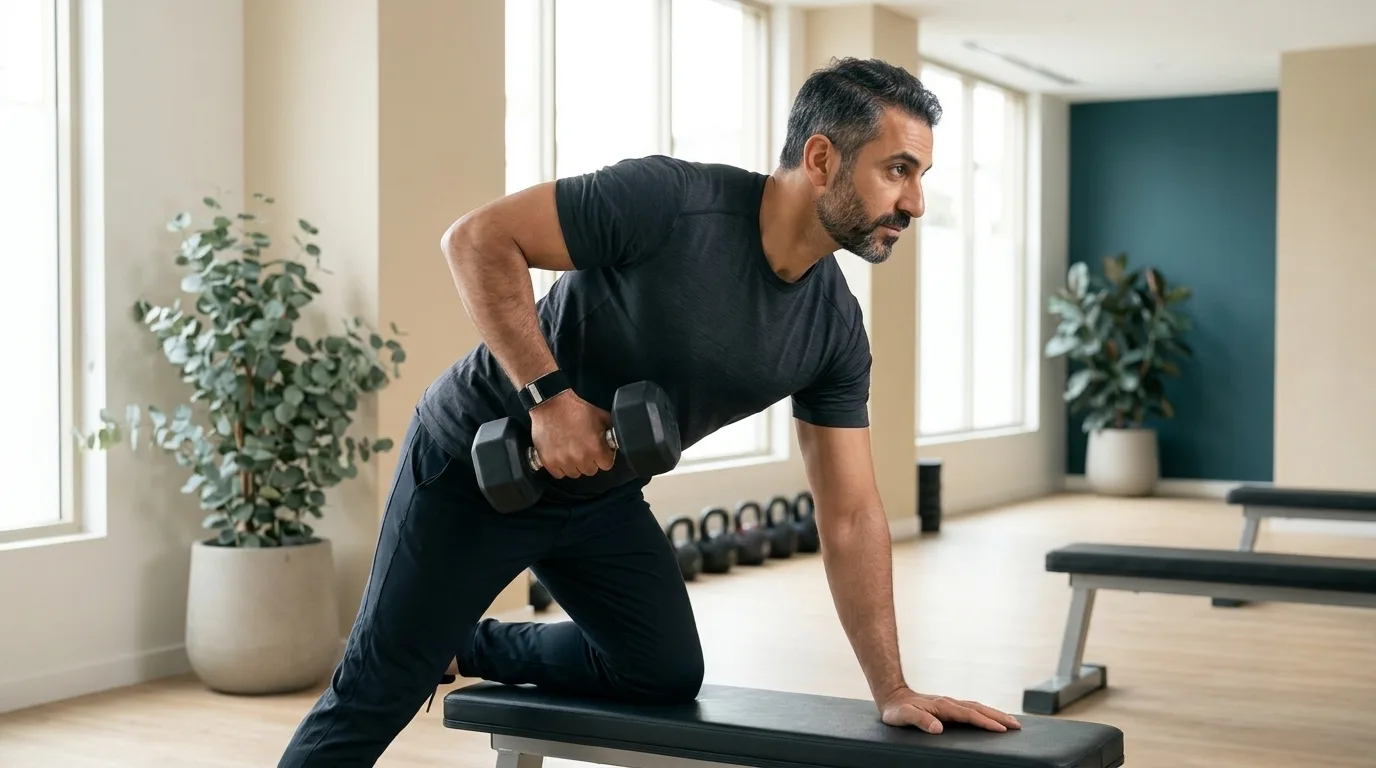
Lose fat, keep muscle: a plain guide to body recomposition
You've been eating better and walking more, but the scales have barely moved. Before you give up, it's worth asking a different question: what is that weight made of? Losing fat while holding on to muscle, often called body recomposition or "body recomp", can make a real difference to how you look, feel and move, even when the number on the scales stays stubborn.
Here's how it works, the everyday basics that help, and how the Thrive Health Band and app help you see the change over weeks, not just on the scales.
What body recomposition means
Body recomposition simply means changing the mix of fat and muscle in your body. Instead of focusing only on weight, the aim is to lose some fat while keeping, or building, muscle.
It's been a big talking point online this week, with fitness threads on X arguing that real progress is losing fat while keeping your muscle, not just chasing a lower number. That message lines up well with Australian advice.
Muscle matters for more than looks. The Better Health Channel lists benefits of strength training that include stronger bones and joints, better balance, and an improved muscle-to-fat ratio. It helps you carry the shopping, climb stairs and keep up with the grandkids.
Why the scales don't tell the whole story
Weight is fat, muscle, water, bone and everything else added together. If you're losing some fat and gaining some muscle at the same time, the scales may hardly change while your jeans fit differently and everyday tasks feel easier. Water also shifts from day to day, which is why one weigh-in can be misleading. Our article on body fat percentage and body composition explains this in more detail.
Lift something, regularly
Strength training is the signal that tells your body to keep its muscle. Australia's 24-hour movement guidelines recommend muscle-strengthening activities on two or more days a week, alongside 30 minutes or more of moderate to vigorous activity on most days.
Better Health suggests a beginner programme like this:
- Eight to ten exercises that work the major muscle groups: legs, hips, back, chest, core, shoulders and arms.
- Start small. One set of each exercise, with as few as eight repetitions, building up over time to two or three sets of eight to 12.
- Make it challenging. Choose a weight or resistance where the last couple of repetitions feel hard.
- Progress gradually. Once you've trained regularly for four to six weeks, increase the weight or resistance as your muscles adapt.
- Rest between sessions. Give each muscle group up to 48 hours before working it hard again.
You don't need a gym. Bodyweight moves like squats, push-ups against a bench and lunges count, as our guide to calisthenics for beginners shows.
Eat enough protein, spread across the day
Protein gives your muscles what they need to repair and grow after training. healthdirect suggests adults aged 19 to 70 need about 52 to 64 grams a day for men and 37 to 46 grams for women, with a little more after 70. Many Australians already get enough, but if you're doing resistance training you might consider a bit more, and it's a good idea to include protein in each meal.
Good sources include lean meat, chicken, fish, eggs, yoghurt, milk, cheese, tofu, nuts, seeds, beans and lentils. If you're thinking about a high-protein diet, talk to your GP or an Accredited Practising Dietitian first. Our article on how much protein you need has meal ideas.
Go gently on the calories
To lose fat, you need to eat a little less energy than you use. Big, fast cuts make it hard to eat enough protein and to train well, so a modest change you can keep up for months tends to work better than a strict plan you drop after three weeks. Keep the five food groups, plenty of vegetables and fibre, and room for the foods you enjoy.
Sleep and recovery count too
Muscle is built while you rest. The guidelines recommend seven to nine hours of good quality sleep with consistent bed and wake times. Short sleep can leave you hungrier and less motivated to train, and sore muscles a day or two after a new workout are normal, as our article on DOMS explains.
How the Thrive app helps you track body recomposition
A band can only ever see half the story. Thrive is built for the other half, so the answers are about you, not just your pulse. The Thrive Health Band has no screen, so you can wear it day and night, and the Thrive by Optihealth app brings your training, food and body composition together, right across your health.
- Body composition readings. When you want a reading, take one using the electrode on the Band. The app shows estimated muscle %, body water % and body fat %, so you can follow the trend over weeks rather than a single weigh-in.
- Strength programs and workouts. Browse the strength program catalogue, start one that suits your level and log your sessions, or record a strength workout with your heart rate.
- Protein on your plate. Log meals by photo, barcode or search, and see protein, carbs and fat against goals you set, including a muscle gain preset.
- Recovery and sleep. Your Recovery Estimate shows how ready you are for another full day, alongside your sleep Quality, Quantity, Regularity and Timing.
- Ask Thrive. Try "How has my muscle percentage changed since I started training twice a week?" or "Do I eat more protein on training days?"
Your Health Fingerprint is ready after about 30 days of wear, so changes stand out against a typical week for you. For planning meals around training, see our guide to meal planning with Thrive.
When to talk to your GP
If you're new to strength training, have a health condition or injury, or are thinking about changing how you eat, check in with your GP first. Thrive isn't a diagnosis, but you can show your Thrive trends to your GP, which can help that conversation.
Before you buy
- Thrive Health Band: A$589 for the band including 12 months of the Thrive plan, paid upfront. Prices are in AUD and include GST.
- Free shipping. Your 12 months start when you activate your Band, and there's no automatic renewal.
- One size, IP68, up to 14 days battery, 12-month warranty, no Apple Health sync. The app is Thrive by Optihealth on iPhone and Android.
- See today's price on the Thrive store
At renewal: a new band plus 12 more months for A$589.
Or keep your band and renew the plan for A$240 a year.
Or A$29 a month with no lock-in.
Consumer guarantees under Australian Consumer Law always apply. See Returns if something is wrong with your purchase.
Common questions
Can you lose fat and build muscle at the same time?
Yes, especially if you're new to strength training or returning after a break. Regular resistance training, enough protein and a modest drop in energy intake are the basics.
How long does body recomposition take?
Changes are gradual. Better Health suggests stepping up your training after four to six weeks of regular sessions, and it's usually worth tracking the trend over a few months rather than week to week.
Does Thrive measure body fat and muscle?
It estimates them. Take a body composition reading using the electrode on the Band and the app shows body fat, muscle and body water percentages. Like any wrist estimate, it's best read as a trend.
For more answers, see Questions.