
Menopause and your bones: osteopenia, bone density and what you can do
The short answer: when oestrogen falls around menopause, bones can lose density faster, and low bone density usually has no symptoms. The habits that help are regular weight-bearing exercise, resistance training, balance work, and enough calcium, vitamin D and protein. Bone density is measured with a bone density scan arranged by your doctor. A wearable can't measure it.
Why menopause affects your bones
healthdirect explains that oestrogen helps keep your bones strong. When oestrogen levels fall after menopause, bones may become weaker, and women who go through menopause early are at higher risk.
A piece in The Conversation on 3 November adds that bone loss can start speeding up before the final period, so it can be under way before you know your last period was your last.
What is osteopenia?
healthdirect describes osteopenia as lower than normal bone density that isn't as severe as osteoporosis. Bones are more fragile and more likely to break from minor accidents. Healthy Bones Australia explains that a bone density scan gives a T-score, and a result between -1 and -2.5 is osteopenia. Whether you need treatment depends on your age, how low your bone density is and your other risk factors.
Osteoporosis usually has no symptoms until a bone breaks, which is why healthdirect calls it the "silent disease". That's why it's worth asking your GP about your risk.
Bone density scans: who should ask
A bone density (DXA) scan is how bone density is measured. Healthy Bones Australia says your doctor will tell you whether you qualify for a Medicare rebate. Rebates apply to groups including people aged 70 or over, people who have broken a bone after minimal trauma, women whose periods stopped for more than 6 months before 45, and people with certain conditions or on long-term steroids. Others with risk factors can pay for a scan directly.
Healthy Bones Australia's Know Your Bones tool is a quick way to check your risk before you see your GP.
Exercise that supports your bones
Healthy Bones Australia recommends a combination of three types:
- Weight-bearing impact exercise. Activities on your feet with firm landings, such as jogging, skipping, stair climbing and dancing.
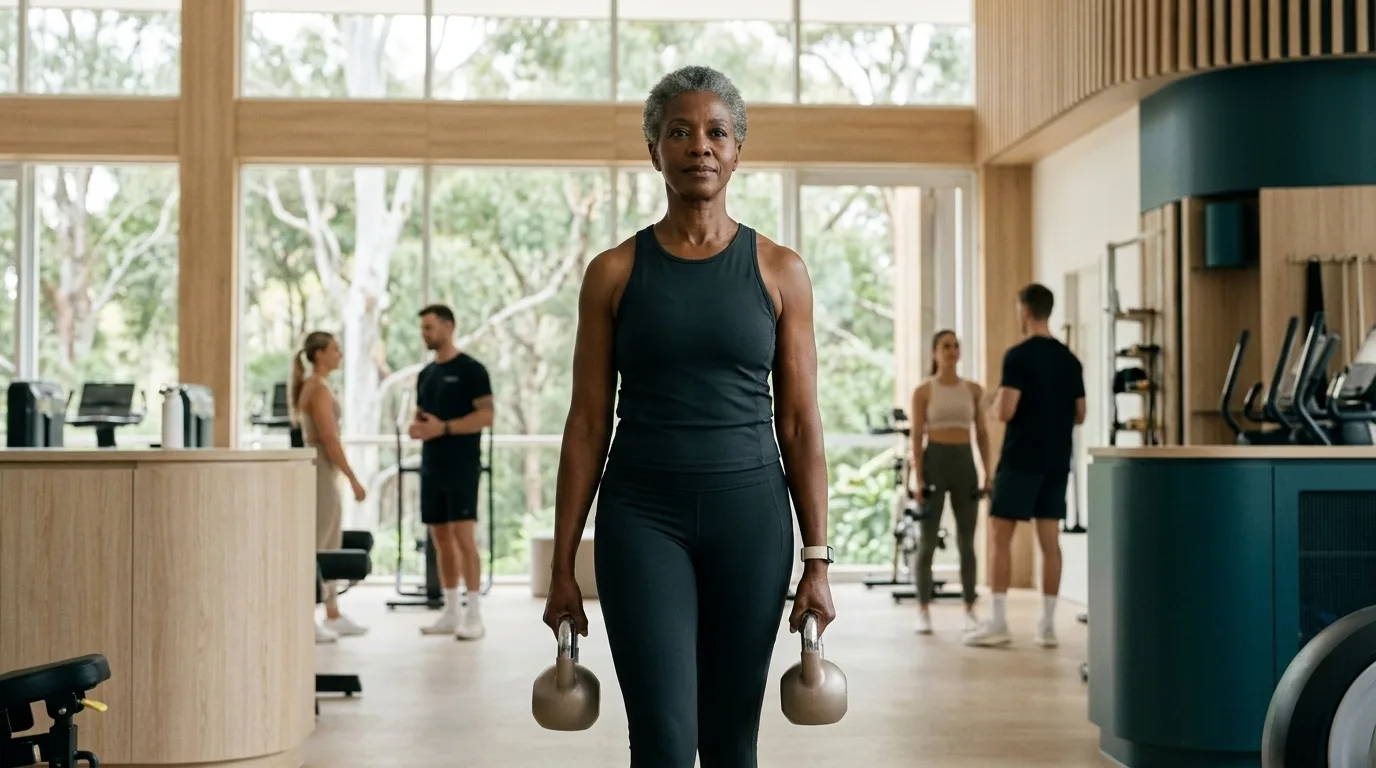
- Resistance training. Moving weight, ideally with gym equipment, and gradually increasing intensity to build bone and muscle strength.
- Balance training. Important for reducing falls.
Jean Hailes suggests at least 3 hours a week of these types of exercise. If you already have osteopenia or osteoporosis, have broken a bone, or have pelvic floor concerns (see Pelvic Floor First's pelvic floor safe exercises), ask your GP or an exercise physiologist which exercises and loads suit you. To get started, see strength training for women.
Food: calcium, vitamin D and protein
Jean Hailes says calcium and vitamin D are important for bone health, and about 99% of your body's calcium is in your bones. Healthy Bones Australia says protein helps maintain and repair muscle and supports healthy bones, and strong muscles help reduce the risk of falls. See how much protein you need as you get older.
How Thrive helps you keep track
First, plainly: the Thrive Health Band does not measure bone density, and Thrive can't tell you whether you have osteopenia or osteoporosis. Only a bone density scan arranged by your doctor can do that. The body composition reading estimates muscle, body water and body fat. It can't measure bone density, and it can't show osteopenia or osteoporosis.
A band can only ever see half the story. Thrive is built for the other half, so the answers are about you, not just your pulse. What it can help with is the habits that support your bones.
- Workouts, measured and recorded. The Band records your steps, active minutes and workouts with your heart rate, so you can see how often you're doing weight-bearing activity.
- Strength training, logged. Start a strength program from the catalogue and log your sessions, so you can see whether you're keeping to two or more a week.
- Protein, logged by you. Log meals by photo, barcode or search and see protein against a goal you set.
- Muscle, estimated. Take a body composition reading using the electrode on the Band to see an estimated muscle percentage as a trend.
- Ask Thrive, to prepare for your GP. Try "How many strength sessions have I done this month?" or "Help me write questions for my GP about bone density." See using Ask Thrive before a GP appointment.
Ask Thrive highlights patterns in your own data. It isn't medical advice.
Questions to take to your GP
- Given my age, menopause timing and family history, should I have a bone density scan?
- Do I qualify for a Medicare rebate?
- Am I getting enough calcium and vitamin D?
- Which exercises are safe and useful for me?
For more on midlife health conversations, see perimenopause, sleep and mood and midlife aches and your GP.
Before you buy
- Thrive Health Band: A$589 for the band plus 12 months of the Thrive plan, paid upfront. Prices are in AUD and include GST.
- After your first 12 months: keep your band and renew the plan for A$240 a year (about A$20 a month), or choose A$29 month-to-month.
- One size, IP68 and 5 ATM water resistance, up to 14 days battery, 12-month warranty.
- The app is Thrive by Optihealth on iPhone and Android. Australian designed and engineered.
- Buy only through the Thrive store on our website.
- We never sell or share your health data.
Consumer guarantees under Australian Consumer Law always apply. See Returns if something is wrong with your purchase.
Common questions
What is the difference between osteopenia and osteoporosis?
Both mean lower than normal bone density. Osteopenia is less severe. healthdirect says a T-score between -1 and -2.5 is osteopenia, and -2.5 or below is osteoporosis.
Does menopause cause bone loss?
Falling oestrogen after menopause can make bones weaker, healthdirect says, and women with early menopause are at higher risk.
Can a smartwatch or fitness band measure bone density?
Thrive can't measure bone density, and it can't show osteopenia or osteoporosis. Bone density is measured with a DXA scan arranged by your doctor.
What exercise is best for bones?
Healthy Bones Australia recommends a mix of weight-bearing impact exercise, progressive resistance training and balance training.
For more answers, see Questions.
Your next step
Try the Know Your Bones tool, then take your result and the questions above to your GP.