
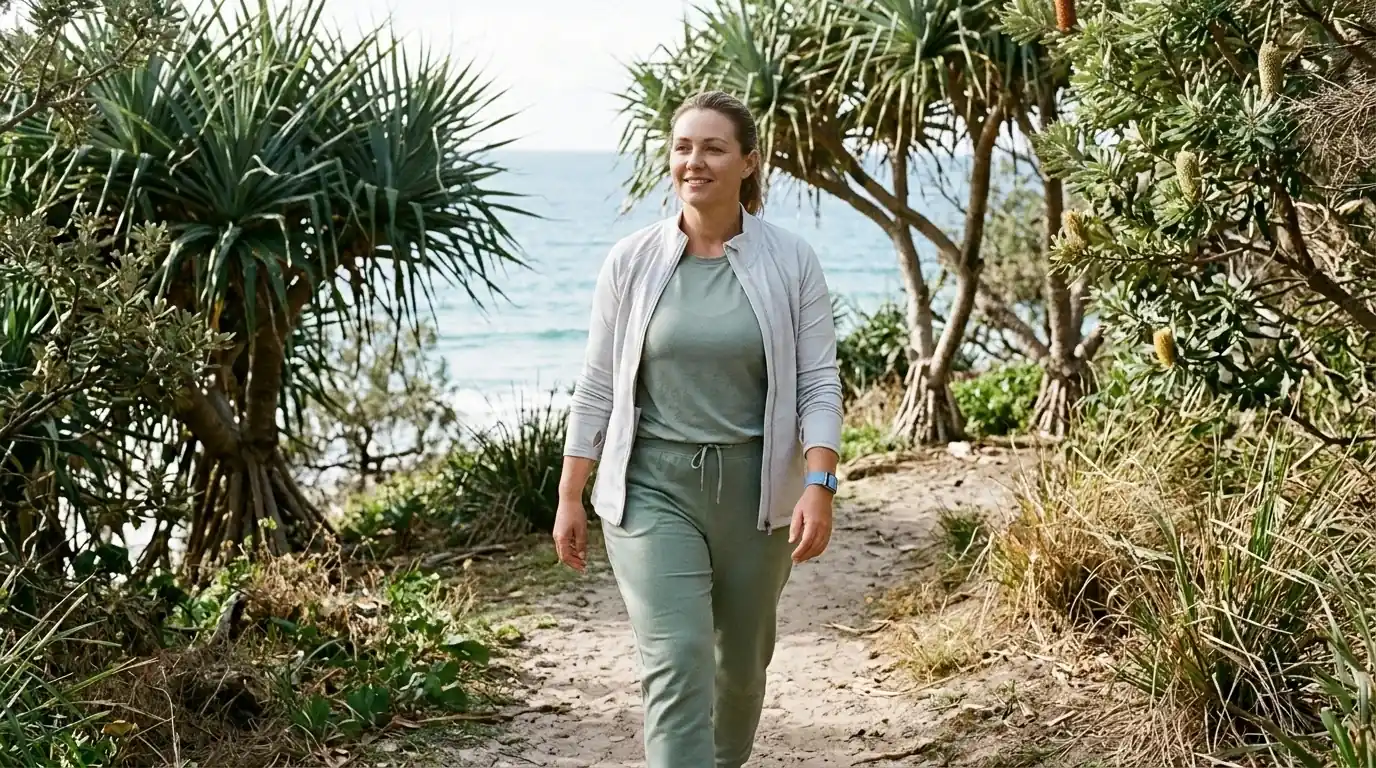
Endometriosis and gentle movement: noticing what helps your week
The short answer: endometriosis is a common condition that can cause pain, fatigue and disruption to everyday life. Medical care sits with your GP and specialists. Alongside that, many people find gentle movement, sleep and a clear record of good and hard days useful. Thrive doesn't diagnose or treat endometriosis. It helps you notice patterns in movement, sleep and mood to take to your appointments.
A new option for contraceptive care, and why it matters here
On 5 November the Australian Government announced that its national network of long-acting reversible contraception (LARC) Centres of Excellence is now open. The centres offer free advice about contraceptive options, and insertion and removal of IUDs and contraceptive implants, through Primary Health Networks in every state and territory. The same announcement notes that, as well as preventing pregnancy, some long-acting contraceptives can also help manage heavy menstrual bleeding, period pain and conditions such as endometriosis.
That is medical care, decided with a clinician. This article is about the everyday movement and tracking piece that sits beside it.
What endometriosis is
Jean Hailes describes endometriosis as tissue similar to the lining of the uterus growing in other parts of the body, often linked with pain and inflammation.
According to the Australian Institute of Health and Welfare, around 1 in 7 (14%) women born in 1973 to 1978 were estimated to have been diagnosed with endometriosis by age 44 to 49. Figures vary by source and age group.
healthdirect explains that it is a progressive and chronic condition, that it can be very painful and can affect fertility, and that there is no cure, though treatments can relieve symptoms.
Common symptoms listed by healthdirect include period pain, pain during or after sex, pelvic pain, bowel or bladder changes around your period, bloating, tiredness and difficulty getting pregnant. If symptoms stop you working, studying or exercising, Jean Hailes says to see your doctor.
Gentle movement, not pushing through
Jean Hailes says physical activity might help people cope with endometriosis by releasing feel-good chemicals that reduce awareness of pain signals, reducing inflammation, helping to relax pelvic floor muscles, improving range of movement around the hips and pelvis, improving mood and reducing fatigue. It also warns that activity can sometimes trigger a pain flare, so it helps to break exercise into small sessions or try different types, such as walking or yoga. Jean Hailes suggests aiming for 20 to 30 minutes most days, easing in if you've had a break.
Useful starting points:
- Short walks on days that feel manageable.
- Swimming or other low-impact movement if land exercise aggravates symptoms.
- Yoga or stretching, if those feel OK for you.
- Rest when you need it. Rest is part of looking after yourself, not a failure of the plan.
Our guides to hating exercise and getting moving and back to exercise after a break keep the pressure low. If pelvic floor symptoms are part of your picture, ask your GP about a pelvic floor physiotherapist. healthdirect notes that pelvic floor physiotherapy can help with some bladder, bowel and chronic pain symptoms.
None of this replaces medical treatment. If a movement makes pain worse in a way that doesn't settle, stop and talk to your GP or physiotherapist.
Sleep, mood and your cycle
Pain and fatigue often show up in sleep and mood. Noticing how your week looks around your period can help you plan lighter days and decide what to raise with your GP. See period tracking, sleep, mood and energy and PMS symptoms.
How Thrive helps you keep track
First, plainly: Thrive doesn't diagnose endometriosis, measure pain or recommend treatment. Only your GP and specialist can do that. Thrive gives wellness estimates and trends.
Thrive brings together the trends from your Band with what you log, such as activity, sleep, cycle notes and how you feel, so patterns across the month are easier to see.
- Activity, measured. Steps, active minutes and workouts, so you can see which weeks you moved more and which weeks you needed to pull back.
- Sleep, measured and estimated. Quality, Quantity, Regularity and Timing across good and hard weeks.
- Mood and check-ins, logged by you. Tag pain, fatigue or cycle days so patterns are easier to spot.
- Cycle tracking, logged by you. Keep period dates beside sleep and mood. See period tracking.
- Ask Thrive. Try "How does my activity look in the week before my period?" or "Help me write questions for my GP about pain and sleep." See Ask Thrive before a GP appointment.
Ask Thrive highlights patterns in your own data. It isn't medical advice.
When to talk to your GP
See your GP if period pain or pelvic pain is getting worse, if symptoms stop you doing day-to-day activities, if you're finding it hard to get pregnant, or if your mood is low. Jean Hailes also suggests seeing your doctor if symptoms make you feel anxious or depressed. Take a short note of your worst days, what you tried and what you want to ask.
Before you buy
- Thrive Health Band: A$589 for the band plus 12 months of the Thrive plan, paid upfront. Prices are in AUD and include GST.
- After your first 12 months: keep your band and renew the plan for A$240 a year (about A$20 a month), or choose A$29 month-to-month.
- One size, IP68 and 5 ATM water resistance, up to 14 days battery, 12-month warranty.
- The app is Thrive by Optihealth on iPhone and Android. Australian designed and engineered.
- Buy only through the Thrive store on our website.
- We never sell or share your health data.
Consumer guarantees under Australian Consumer Law always apply. See Returns if something is wrong with your purchase.
Common questions
How common is endometriosis in Australia?
The AIHW estimates that around 1 in 7 (14%) women born in 1973 to 1978 had been diagnosed by age 44 to 49. Figures vary by source and age group. Ask your GP for advice that fits your situation.
Can exercise cure endometriosis?
No. healthdirect says there is no cure, though treatments can relieve symptoms. Gentle movement sits beside medical care, and Jean Hailes notes that activity can sometimes trigger a pain flare.
Does the Thrive Health Band diagnose endometriosis?
No. Thrive tracks activity, sleep and the check-ins you log. Diagnosis and treatment sit with your GP and specialist.
Where can I read more from trusted Australian sources?
Jean Hailes on endometriosis, healthdirect and Endometriosis Australia.
For more answers, see Questions.
Your next step
If movement has felt off-limits, try one short walk or stretch session on a better day this week, note how you feel afterwards, and take that note to your next GP visit.