
Cholesterol levels explained: what your numbers mean and how to lower cholesterol
Your GP says your cholesterol is "a bit high", then come the letters: LDL, HDL, triglycerides. If you nodded along without quite following, you're in good company.
Healthdirect says more than 2 in 5 Australian adults live with high cholesterol, and there are no obvious symptoms. The reassuring part is that everyday changes to what you eat and how much you move can make a real difference. Here's what your numbers mean, how to lower cholesterol day to day, and how the Thrive by Optihealth app keeps your results and habits side by side.
What is cholesterol?
Cholesterol is a waxy, fat-like substance your body needs to build cells and make hormones and vitamin D. Your liver makes most of it, healthdirect explains, and the rest comes from food.
Cholesterol travels around your blood with proteins called lipoproteins. The Heart Foundation describes the two main types:
- LDL cholesterol, the "bad" one. It can stick to the walls of your arteries and build up into plaque.
- HDL cholesterol, the "good" one. It carries LDL away from your arteries and back to your liver to be broken down.
Triglycerides are the most common type of fat in your body, and they're usually measured in the same test. The Heart Foundation says being overweight, eating a lot of high fat and sugary foods, or drinking too much alcohol can push them up.
Why your numbers matter
Over time, too much LDL can lead to fatty deposits that narrow your arteries. Healthdirect and the Heart Foundation both link this to heart disease and stroke. You can't feel it, which is why the Heart Foundation says a blood test and regular check-ups matter.
What do your cholesterol levels mean?
Cholesterol is checked with a blood test called a lipid panel or lipid profile. Healthdirect says it usually shows:
- total cholesterol
- LDL cholesterol
- HDL cholesterol
- triglycerides
Results in Australia are given in mmol/L.
There's no single number that suits everyone. The Heart Foundation notes that targets depend on things like your age and family history, so your GP will look at your results alongside the rest of your health.
What pushes cholesterol up?
There's no single cause. The Heart Foundation and healthdirect list these factors:
- getting older
- smoking
- not much physical activity
- carrying extra weight
- a diet high in saturated fats
- family history
Some people inherit high cholesterol. Healthdirect says about 1 in 250 people have familial hypercholesterolaemia, a genetic condition, and many don't know they have it. If high cholesterol runs in your family, mention it to your GP.
And what about eggs? Better Health says research has shown that cholesterol in food has a neutral relationship with blood cholesterol, and people not at high risk don't need to limit foods like eggs. Our piece on eggs and cholesterol explains more.
How to lower cholesterol day to day
There's no single superfood. What helps is a heart-healthy pattern of eating and moving. Here's what the Heart Foundation, healthdirect and Better Health suggest:
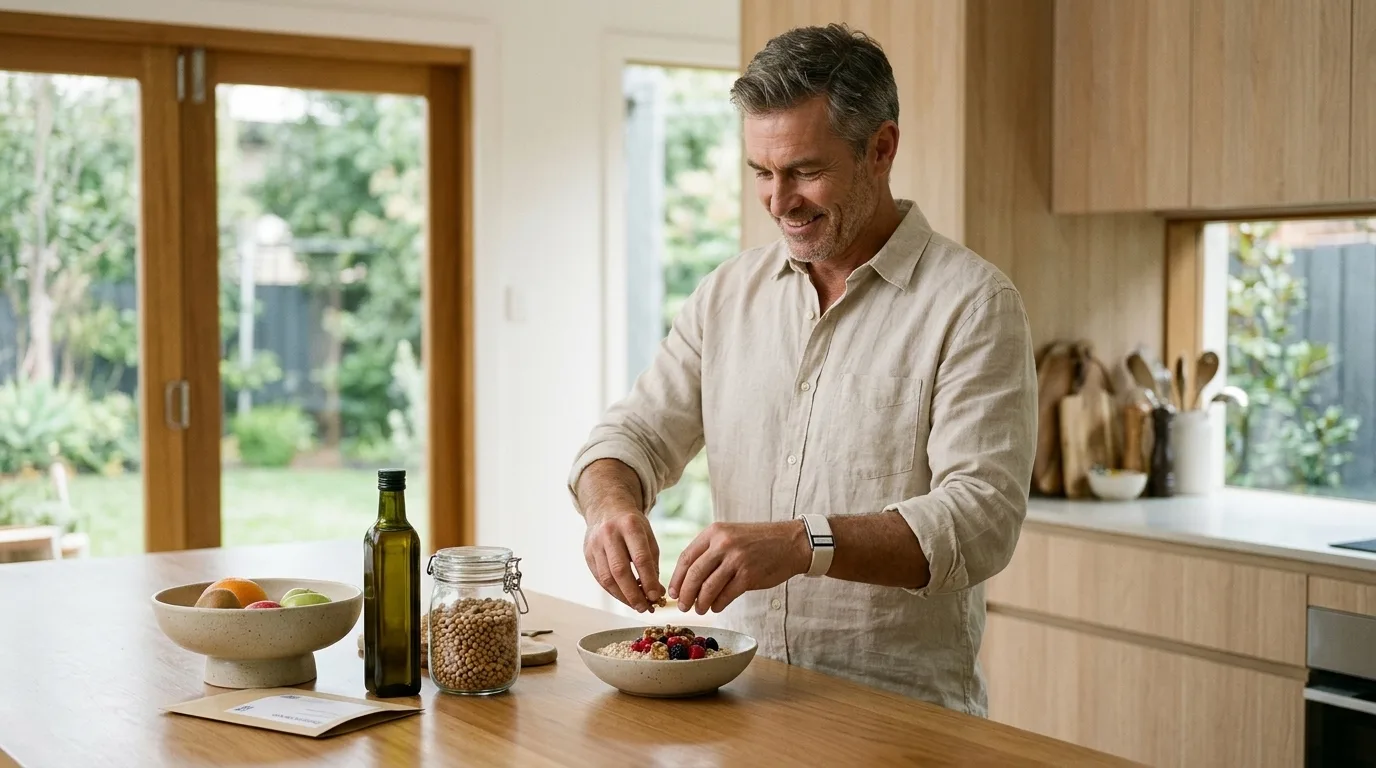
- Swap saturated fats for healthier fats. Use olive oil, nut butters or avocado instead of butter and cream. Go easy on fatty meats, cakes and biscuits.
- Eat more soluble fibre. Oats, barley, psyllium, lentils, peas and beans, plus fruit and veg like apples and carrots. Better Health says oats and legumes can lower LDL cholesterol by 5%. See how much fibre you need a day.
- Fill up on plants and fish. Plenty of vegetables, fruit and wholegrains, fish and seafood, legumes, nuts and seeds. Keep red meat lean and to one to three times a week.
- Get moving most days. The Heart Foundation suggests working up to 30 to 60 minutes of moderate activity, such as brisk walking, most days, plus muscle-strengthening twice a week. Activity can help raise HDL and lower triglycerides. See how many steps a day.
- Go easy on alcohol, and don't smoke. Both affect your numbers. If you'd like help to quit, talk to your GP or call Quitline on 13 7848.
When to see your GP
The Heart Foundation suggests a Heart Health Check with your GP from age 45, from 35 if you live with diabetes, and from 30 for First Nations people. Your GP may check your blood pressure, cholesterol and blood sugar levels, and work out your chance of a heart attack or stroke in the next five years. Healthdirect says if you're 45 or older, you should have your blood fats measured at least every 5 years. The Heart Foundation says Heart Health Checks are covered by Medicare and free at practices that bulk bill them.
If your GP suggests a cholesterol-lowering medicine, take it as directed, and don't stop on your own because you feel well. Talk to your GP first.
You can show your Thrive trends to your GP too. They help you describe how your eating and activity have changed since your last test. You can call the healthdirect helpline on 1800 022 222 any time to speak with a registered nurse.
How Thrive helps you keep track
A band can only ever see half the story. Thrive is built for the other half, so the answers are about you, not just your pulse.
What Thrive doesn't do. The Thrive Health Band doesn't measure cholesterol. A blood test does that. Thrive helps you keep those results next to the everyday habits that shape them, right across your health.
Keep your results together. On Upload Records you can add a photo or PDF of your lipid panel. Your Records sorts results by type, and cholesterol sits under Organ & Metabolic Function, so you can find this year's result next to last year's. See keeping your blood test results in one place.
See how much you move. The Band has no screen and up to 14 days of battery, so you can wear it day and night. Thrive shows your steps, workouts and resting heart rate over weeks, not just today. See resting heart rate explained.
Log your meals. Search Australian foods or scan a barcode, and see your daily calories, protein, carbs and fat.
Keep your medicines in one place. Add your morning tablets and any supplements in Medications & Supplements, with the dose and when you started.
Try a small change. Start a Nutrition or Activity experiment from the Experiments library and compare your signals before and after. Your Health Fingerprint is ready after about 30 days of wear.
Then ask Ask Thrive questions like:
- "How many days last month did I get 30 minutes of activity?"
- "Has my resting heart rate changed since I started walking after dinner?"
- "How did my weeks compare before and after my last blood test?"
Before you buy
- Thrive Health Band: A$589 for the band including 12 months of the Thrive plan, paid upfront. Prices are in AUD and include GST.
- Free shipping. Your 12 months start when you activate your Band, and there's no automatic renewal.
- One size, IP68, up to 14 days battery, 12-month warranty, no Apple Health sync. The app is Thrive by Optihealth on iPhone and Android.
- See today's price on the Thrive store
At renewal: a new band plus 12 more months for A$589.
Or keep your band and renew the plan for A$240 a year.
Or A$29 a month with no lock-in.
Consumer guarantees under Australian Consumer Law always apply. See Returns if something is wrong with your purchase.
Common questions
What is a normal cholesterol level?
There's no single normal number. The Heart Foundation says targets depend on your age and family history, so ask your GP.
Can you lower cholesterol naturally?
Some people can. Healthdirect says some people can bring their cholesterol to a safe level with diet and lifestyle changes, while others also need medicine.
Can a fitness band measure cholesterol?
No. The Thrive Health Band doesn't measure cholesterol. A blood test your doctor arranges does that. Thrive helps you keep the results with your activity, meals and medicines.
For more answers, see Questions.