
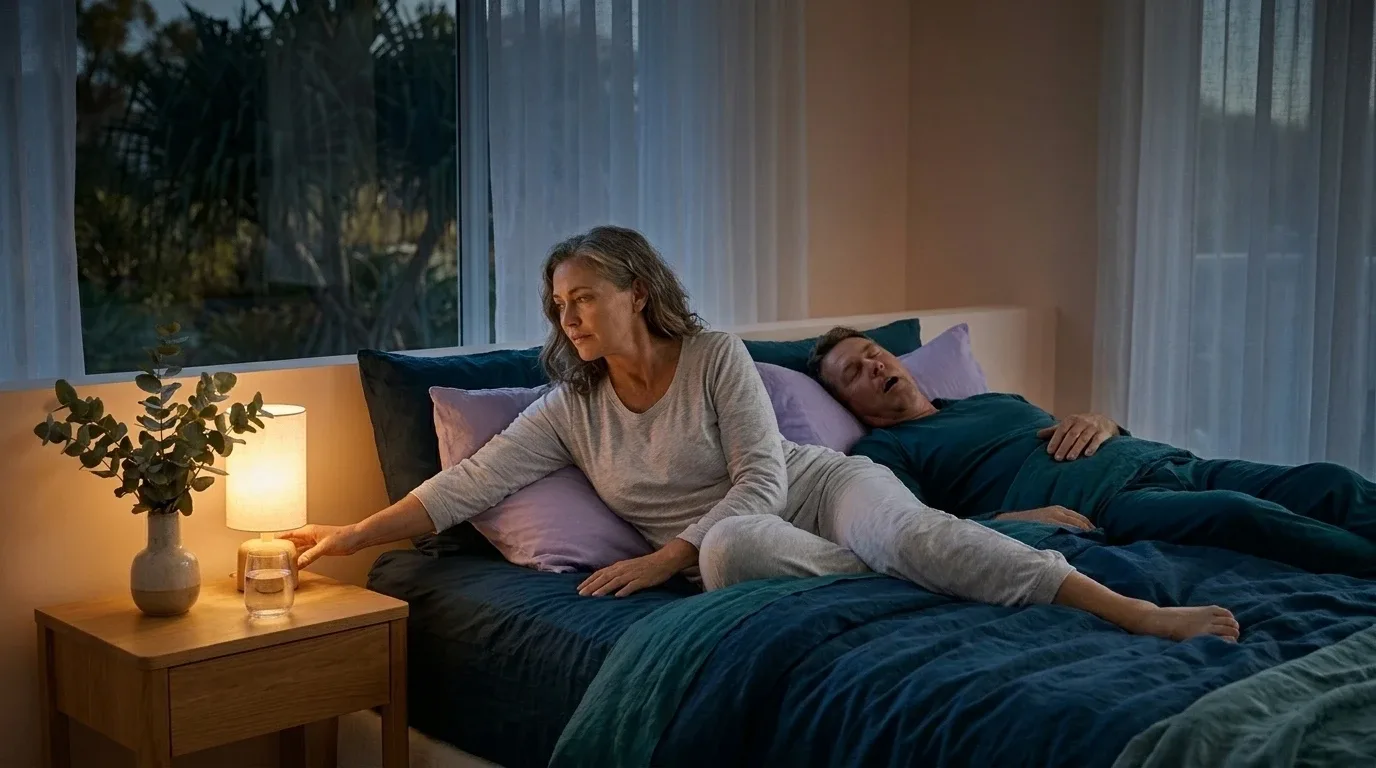
Snoring, sleep apnoea and when a sleep study makes sense: a calm guide
Direct answer
Snoring is common, and on its own it is often harmless. It is worth talking to your GP when snoring is loud, when someone notices pauses in your breathing, gasping or choking in your sleep, or when you wake unrefreshed and feel sleepy through the day. Those can be signs of obstructive sleep apnoea, and the way to find out is with your GP, who may refer you for a sleep study.
The Thrive Health Band does not detect, screen for or diagnose sleep apnoea, and it does not tell you whether you snore. What Thrive can do is help you keep a clear record of how you have been sleeping, how your mornings feel and what else was going on, so the conversation with your GP starts from weeks of notes rather than a foggy memory.
Why sleep is in the news this week
Sleep DownUnder 2026, the flagship conference of the Australasian Sleep Association and the Australia and New Zealand Sleep Science Association, runs at the Brisbane Convention and Exhibition Centre from 11 to 14 November. It brings together sleep health and sleep medicine professionals from across Australia and New Zealand, and this year includes a new dental stream. Thrive is not affiliated with the conference. It is simply a good week to take snoring seriously, without panicking about it.
Snoring, and when it might be more
The Sleep Health Foundation says about 40% of men and around 30% of women have at least mild snoring on some nights, and about 15% of people snore on most nights. Snoring happens when the relaxed walls of the throat vibrate as you breathe in. It tends to be worse on your back, after alcohol, with a blocked nose, and with extra weight around the neck.
Obstructive sleep apnoea (OSA) is different. healthdirect describes it as a breathing condition where your airway becomes partly or completely blocked while you sleep. You stop breathing for short periods and briefly wake to restart, often without knowing it. The Sleep Health Foundation notes that over 10% of regular snorers have sleep apnoea to a significant degree.
Signs that are worth raising with your GP, according to healthdirect and the Sleep Health Foundation, include:
- loud snoring, especially with pauses in breathing that someone else notices
- waking with gasping or choking
- feeling unrefreshed after sleep, even with enough time in bed
- sleepiness during the day, particularly in the afternoon
- waking with a dry mouth or a headache
- irritability, low mood, or trouble with attention and memory
Women can notice different symptoms. The Sleep Health Foundation says females with OSA may have more trouble falling or staying asleep, poor mood and fatigue, while males may be more likely to have the familiar loud snoring and daytime sleepiness. So "I don't snore much" does not rule it out if the rest of the picture fits.
Why it is worth checking
Sleep apnoea is treatable, and getting it checked is about feeling better as much as anything else. healthdirect notes that untreated OSA can increase your chance of other health problems, such as heart disease. The Sleep Health Foundation adds that people with OSA are about two and a half times more likely to have a car accident, because broken sleep leads to less alertness and slower reactions. If you are drowsy behind the wheel, stop and rest, and mention it to your GP.
How to stop snoring: what can help
If your snoring is simple snoring, a few changes may help. The Sleep Health Foundation suggests:
- avoiding alcohol for at least four hours before bed
- managing allergies or a blocked nose, if they make your snoring worse (here is more on hay fever and sleep)
- losing weight, if you are carrying extra
- sleeping on your side, though it notes positional aids often do not keep you there all night
Nasal strips may unblock your nose, but on their own they will not stop snoring. A dentist can fit an oral appliance that brings the lower jaw forward, which works for some people. If your partner's snoring is the reason you are sleeping apart, our piece on sleep divorce may help, and you can read more on alcohol and sleep.
If snoring keeps going, is loud, or comes with any of the signs above, it is a GP conversation rather than a DIY project.
What a sleep study involves
healthdirect explains that to look into OSA, your GP will ask about your symptoms and examine you, including your nose and throat. They may check your blood pressure, and may use a short questionnaire called the Epworth Sleepiness Scale to understand how sleepy you feel during the day.
You may then need an overnight sleep study. This involves wearing a small device overnight that monitors your breathing, oxygen levels and sleep patterns. Some clinics run studies under supervision in a sleep laboratory, and some people can do a home sleep study. Your GP may be able to refer you directly, or you may see a sleep physician first.
If the study shows OSA, treatment depends on how severe it is and on your overall health. healthdirect lists options including self-care steps, an oral appliance fitted by a dentist, and CPAP, a small pump that delivers air through a mask at night. Your GP or sleep physician will talk you through what suits you.
How Thrive helps you keep track
Thrive can help you get ready for that conversation with your GP. The Thrive Health Band is Australian designed and engineered. It has no screen, so there is nothing glowing on your wrist at 2am, and up to 14 days of battery means you are not taking it off to charge before bed. Thrive cannot tell you whether you have sleep apnoea. It can help you notice patterns and bring them to someone who can.
Your nights, and your mornings, over weeks
In the morning, the Thrive by Optihealth app shows how long you slept, with deep, light and REM sleep and time awake. REM shows when Precise sleep is switched on in the app's settings. Thrive also scores quantity, quality, regularity and timing, so you can see whether the hours moved or the timing did. Today's Vitality brings your sleep and recovery, heart, load and mood together each morning.
Thrive learns what is usual for you over time, so you can see whether recent weeks look different from your usual. Some readings are estimates or trends rather than direct measurements. Blood oxygen in Thrive, for example, is an estimate and trend from a wrist band. It is not a sleep study, and a normal-looking night in the app does not rule anything out.
Log how you feel, and what else was going on
A band can read your sleep. It cannot know that you woke with a headache, that your energy has been flat by mid-afternoon, or that you had a few drinks last night. That part is yours to add, and it takes seconds:
- Daily Check-In. Rate your mood and stress, check in on your energy, and tag your day with the context that matters, such as alcohol, travel or work stress.
- Log Symptom. Note things like a morning headache or a dry mouth, so you are not relying on memory later.
- The rest of the picture. Medications, including any sleeping tablets, and the rest of your health record sit in the same place.
Ask Thrive, in your own words
Ask Thrive looks across your readings, your logs and your check-ins, shows what it considered, and is honest about what it cannot yet prove. You might ask:
- "How has my sleep looked over the past month compared with my usual?"
- "How have my mornings felt on nights after I've had a drink?"
- "Help me put my questions about snoring into words for my GP."
Ask Thrive gives explanations, not medical advice. It will not tell you whether you have sleep apnoea or whether you need a sleep study. That is a conversation for your GP.
Bring your partner into it, if you like
Often the person who notices the snoring or the pauses is not the one doing it. healthdirect and the Sleep Health Foundation both suggest bringing your bed partner to the appointment so they can describe what happens at night.
With Thrive Loops, you can choose to share selected information with your partner, a participating health professional or someone else you trust. You choose exactly what to share and with whom, and you can revoke access any time. Your partner can tell you, and your GP, what they hear at night.
Take a clear picture to your GP
Create a Thrive Health Report on My Health on the web: pick the dates and sections, then save it as a PDF to take to your GP. Readings are labelled measured or estimated.
Start with your own words and your partner's account, then show the report if it helps. Here is more on getting ready for a GP appointment with Ask Thrive.
We never sell or share your health data. With Thrive Loops, you choose who sees it. You can revoke access any time. Health data, including Ask Thrive data, is stored and processed in Australia.
When to talk to your GP
Book your GP if your snoring is loud or bothering your household, if someone has noticed pauses in your breathing, gasping or choking, or if you are sleepy during the day despite enough time in bed. You do not need weeks of Thrive data first. Call healthdirect on 1800 022 222 for advice from a registered nurse at any hour. If someone is very unwell or struggling to breathe, call triple zero (000).
If your trouble is mostly falling or staying asleep, our pieces on CBT-I for insomnia and feeling tired but wired may help too.
Before you buy
A$589 for the band plus 12 months of the Thrive Plan, then renew from A$240 a year. Nothing renews automatically. The Band is bought once and stays yours. Prices are in AUD and include GST. Free shipping. Your 12 months start when you activate your Band. The Thrive by Optihealth app is on iPhone and Android. Australian designed and engineered. Up to 14 days battery, IP68 / 5 ATM and a 12-month warranty.
At renewal: a new band plus 12 more months for A$589.
Or keep your band and renew from A$240 a year.
Or A$29 a month with no lock-in.
Or A$430 prepaid for 24 months on the plan page (a separate option, not part of the annual illustration).
See what Thrive includes. Consumer guarantees under Australian Consumer Law always apply. See Returns if something is wrong with your purchase.
Common questions
Can Thrive tell me if I have sleep apnoea?
No. Thrive does not detect, screen for or diagnose sleep apnoea. It helps you keep a record of your sleep trends, how you feel and what else was going on, so you can talk it through with your GP. A sleep study is how sleep apnoea is diagnosed.
Is snoring always a sign of sleep apnoea?
No. Many people snore without having sleep apnoea. It is worth a GP visit when snoring is loud or comes with pauses in breathing, gasping, or daytime sleepiness.
How do I get a sleep study?
Start with your GP. They may refer you for an overnight study, either in a sleep laboratory or, for some people, at home, or refer you to a sleep physician.
Can my partner see my Thrive sleep information?
Only if you choose. With Thrive Loops you choose exactly what to share and with whom, and you can revoke access any time.
Sources
- Sleep DownUnder 2026: sleepdownunder.com (11 to 14 November 2026, Brisbane)
- healthdirect: Obstructive sleep apnoea (OSA)
- Sleep Health Foundation: Obstructive Sleep Apnoea
- Sleep Health Foundation: Snoring
- Thrive: Sleep tracker band
- Thrive: Getting ready for a GP appointment with Ask Thrive