
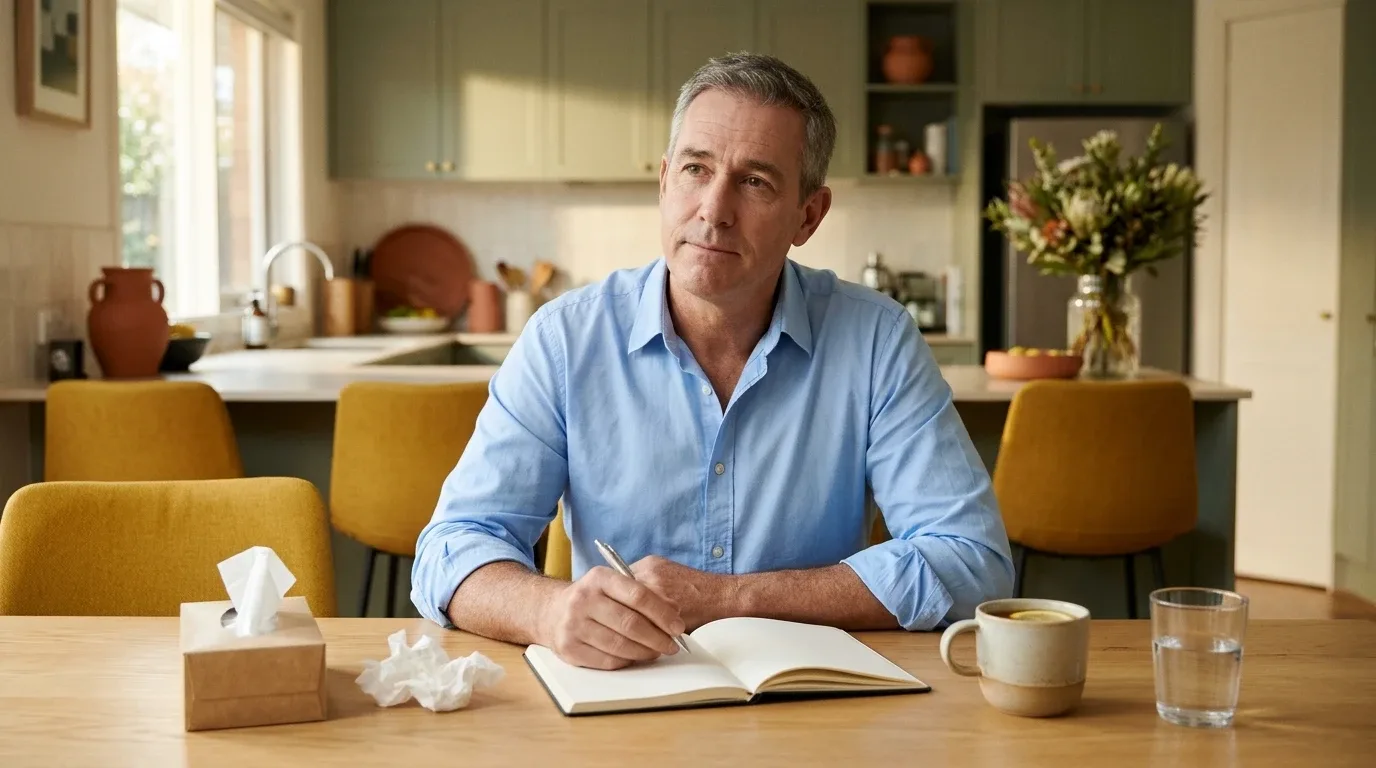
Do I need antibiotics? Colds, sore throats and what to ask your GP
Direct answer
Most colds, flu and COVID-19 are caused by viruses, and antibiotics do not work against viruses. Most sore throats are caused by viruses too and get better on their own, although some, such as strep throat, are caused by bacteria and may need antibiotics. Whether you need them is a decision for you and your GP, and it is a fair question to ask out loud at the appointment.
The Thrive Health Band cannot tell you whether an infection is viral or bacterial, and it cannot tell you whether you need antibiotics. Thrive does not diagnose. What it can do is help you keep a clear record of your symptoms, your sleep and your overnight heart trends while you are unwell, so you can tell your GP what has changed and when, rather than guessing.
Why antibiotics are in the news this week
On 17 November 2026 the Australian Medical Association released a report, Antimicrobial Resistance in Australia. As ABC News reported, the latest Australian figures show reports of critical resistance jumped by more than 25 per cent in 2024 alone. The ABC also reported that, according to the latest figures, more than 1,000 Australians died in 2020 because of infections caused by five common antimicrobial-resistant bacteria.
There is some good news in the coverage too. The ABC reported that antimicrobial stewardship, the programs that promote responsible use of these medicines in the health system, has reduced overall antibiotic use by about 21 per cent in the past decade.
It is also World AMR Awareness Week from 18 to 24 November, run each year by the World Health Organization. Thrive is not affiliated with the AMA, the ABC or the WHO. It is simply a good week to understand what antibiotics can and cannot do, without worrying about every sniffle.
What antibiotics do, and what they don't
healthdirect, the Australian Government's health information service, explains that antibiotics are medicines that treat infections and diseases caused by bacteria. They work by killing bacteria or stopping them from multiplying, which helps your immune system fight the infection.
They do not work against viruses, which healthdirect says are the cause of most colds, flu, COVID-19 and bronchitis. So for a typical cold, antibiotics will not help you get better faster. Here is more on how long a cold usually lasts, and when you can exercise again.
Like all medicines, antibiotics can have side effects. healthdirect lists diarrhoea, nausea and vomiting, and thrush among the common ones.
What antibiotic resistance means for you
Antibiotic resistance happens when bacteria change to protect themselves from an antibiotic, so the medicine no longer works. healthdirect says the main cause is antibiotic use, including using antibiotics when they are not needed and not taking them properly, such as missing doses or not finishing the course. It also notes that Australia has one of the highest rates of antibiotic use in the world.
If you get an antibiotic-resistant infection, healthdirect says you will be sick for longer, may get more complications, may need more complex care, and might be infectious for longer.
The everyday things that help are simple. healthdirect suggests not asking for antibiotics when you have a cold or the flu, taking antibiotics as prescribed by your doctor for as long as you need them, and good hygiene to help stop infections spreading.
Sore throats: viral, bacterial, and hard to tell apart
A sore throat is when the back of your throat is red, swollen and painful, especially when you swallow. healthdirect says most sore throats are caused by viruses, such as a cold or the flu, COVID-19 or glandular fever. Sometimes a bacterial infection is the cause, especially a type called group A strep, also known as strep throat.
The Australian Commission on Safety and Quality in Health Care puts it plainly in its decision aid for consumers: a sore throat can be caused by a viral or bacterial infection, and it is hard for your doctor to tell which it is. Its decision aid says symptoms usually get better in 2 to 7 days without antibiotics. healthdirect adds that a sore throat caused by a virus usually gets better on its own within about 10 days, and that if bacteria such as strep are the cause, you might need antibiotics to prevent complications.
That is why the decision is worth making together with your GP, rather than walking in expecting a script, or expecting to be sent away without one. Your GP may look at your throat, feel your neck for swollen glands, and sometimes take a throat swab.
Looking after yourself in the meantime
healthdirect suggests you can manage most sore throats with self-care at home:
- get plenty of rest
- drink plenty of water to stay well hydrated
- gargle with warm water and salt
- avoid things that irritate your throat, such as smoke
- rest your voice
Ask your pharmacist about over-the-counter options such as pain relief or throat lozenges, and check the instructions before you take them.
What to ask your GP
The Commission's decision aid suggests some questions to consider when talking with your doctor:
- Do I need antibiotics?
- What happens if I do not take antibiotics?
- Do I know enough about the benefits and harms of taking antibiotics, and of not taking them?
- Am I clear about which benefits and harms matter most to me?
- Do I have enough information and support to decide?
healthdirect also suggests you can ask your doctor about alternatives to antibiotics, and why they recommended a particular antibiotic for you.
If your GP does prescribe antibiotics, healthdirect's advice is to follow the instructions from your doctor or pharmacist: take them at the right time, take them for as long as you are told to even if you feel better, do not share them with other people, and return any tablets you do not use to your pharmacy.
How Thrive helps you keep track
The Thrive Health Band is Australian designed and engineered. It has no screen and up to 14 days of battery, so you can keep wearing it to bed when you are unwell rather than taking it off to charge. Thrive cannot tell you what kind of infection you have. It can help you keep the story of how you have been, in one place.
Log your symptoms as they happen
When you are feeling rotten, the days blur together. In the Thrive by Optihealth app, Log Symptom lets you search for symptoms such as Sore throat, Runny nose, Blocked nose or Cough, and add when each one started and stopped. So when your GP asks "how long has this been going on?", you have an answer.
The Daily Check-In adds the rest of the picture. Rate your mood and stress, check in on your energy, and tag your day with the context that matters. If your GP prescribes something, you can log your medications in the same place, so the start of a course sits right beside your symptoms.
See how your nights are tracking
Being unwell often shows up overnight. Wear the Band to bed, and the Overnight Recovery card looks at your resting heart rate and heart rate variability (HRV) during sleep. Thrive also shows your temperature trend and scores your sleep for Quality, Quantity, Regularity and Timing.
Thrive learns what is usual for you over time, and builds your Health Fingerprint, a picture of your own patterns right across your health. That means you can see whether this week looks different from your usual, not from an average. Some readings are estimates or trends rather than direct measurements. Thrive's temperature trend comes from the Band on your wrist, so if you want to check for a fever, use a thermometer.
Ease back in when you are ready
Once you are on the mend, the Recovery Estimate card combines your sleep, activity and overnight heart rate to help answer one question: am I ready for another full day, or does my body need more rest? It also estimates how long until you are back to your usual. That makes the return to your walk, run or gym session less of a guess. Here is more on resting heart rate and what HRV is.
Ask Thrive, in your own words
Ask Thrive looks across your readings, your logs and your check-ins, shows what it considered, and is honest about what it cannot yet prove. You might ask:
- "How has my sleep compared with my usual since I logged a sore throat?"
- "When did my resting heart rate settle back to my usual after my last cold?"
- "Help me put my questions about antibiotics into words for my GP."
Ask Thrive gives explanations, not medical advice. It will not tell you whether an infection is viral or bacterial, or whether you need antibiotics. That is a conversation for your GP.
Take a clear picture to your GP
Create a Thrive Health Report on My Health on the web: pick the dates and sections, then save it as a PDF to take to your GP. Readings are labelled measured or estimated. Start with how you have been feeling in your own words, then show the report if it helps. Here is more on getting ready for a GP appointment with Ask Thrive and logging your symptoms in Thrive.
If someone is looking after you, such as a partner or an adult child, Thrive Loops lets you choose to share selected information with them, or with a participating health professional. You choose exactly what to share and with whom.
We never sell or share your health data. With Thrive Loops, you choose who sees it. You can revoke access any time. Health data, including Ask Thrive data, is stored and processed in Australia.
When to talk to your GP
healthdirect suggests seeing your doctor if you have a sore throat that lasts more than a few days or is getting worse, a fever (a temperature over 38°C), large tender lumps in your neck, new or more serious symptoms, or if you feel very unwell or are worried.
Seek medical help straight away if you have trouble breathing, severe pain, difficulty swallowing, neck stiffness, or signs of severe infection such as a high fever, extreme tiredness or confusion, or if you have a weakened immune system or other serious health condition and develop a sore throat.
You do not need weeks of Thrive data first. Call healthdirect on 1800 022 222 for advice from a registered nurse at any hour. If you are having trouble breathing or are very unwell, call triple zero (000).
Before you buy
A$589 for the band plus 12 months of the Thrive Plan, then renew from A$240 a year. Nothing renews automatically. The Band is bought once and stays yours. Prices are in AUD and include GST. Free shipping. Your 12 months start when you activate your Band. The Thrive by Optihealth app is on iPhone and Android. Australian designed and engineered. Up to 14 days battery, IP68 / 5 ATM and a 12-month warranty.
At renewal: a new band plus 12 more months for A$589.
Or keep your band and renew from A$240 a year.
Or A$29 a month with no lock-in.
Or A$430 prepaid for 24 months on the plan page (a separate option, not part of the annual illustration).
See what Thrive includes. Consumer guarantees under Australian Consumer Law always apply. See Returns if something is wrong with your purchase.
Common questions
Do antibiotics help a cold?
No. healthdirect says antibiotics do not work against viruses, which cause most colds. Rest, fluids and time are what usually help.
Do I need antibiotics for a sore throat?
Often not. Most sore throats are caused by viruses and get better on their own. Some are caused by bacteria, such as strep throat, and may need antibiotics. Your GP can help you decide.
Can Thrive tell me if I need antibiotics?
No. Thrive does not diagnose, and it cannot tell whether an infection is viral or bacterial. It helps you keep a record of your symptoms, sleep and overnight trends so you can talk it through with your GP.
Why does antibiotic resistance matter to me?
When bacteria become resistant, the antibiotics that used to treat them stop working. healthdirect says resistant infections can mean being sick for longer and needing more complex care. Using antibiotics only when they are needed, and as prescribed, helps slow resistance down.
Sources
- ABC News: Antibiotic resistance on track to kill 39 million people in coming decades, doctors warn (17 November 2026)
- World Health Organization: World AMR Awareness Week (18 to 24 November 2026)
- healthdirect: Antibiotics
- healthdirect: Sore throat (pharyngitis)
- Australian Commission on Safety and Quality in Health Care: Sore throat: should I take antibiotics? (decision aid for consumers)
- Thrive: How long does a cold last, and when can you exercise again?
- Thrive: Getting ready for a GP appointment with Ask Thrive